Natural Calcium Carbonate Chalk Powder

High-purity CaCO3 mineral filler for rubber, plastic, paint, wall putty, PVC, paper, ceramic, cable, adhesive, sealant and flame retardant compound manufacture.

Back to Home
Natural calcium carbonate whiting chalk powder in bulk bags ready for industrial dispatch
Chalk Powder
Impure form of calcium carbonate
ISO
Certified Quality
For Chalk Powder Queries

Gayatri Minerals, 359, GIDC, PORBANDAR: 360575, Gujarat
gayatriminerals.gm@gmail.com
+91 98259 19197 / +91 98794 54515

Natural Whiting
Chalk Powder

Whiting Chalk Powder are also named as dalla powder, chalk mitti, laapi putty powder, etc. As Whiting Chalk Powder manufacturers, we are obliged to cater clients from every vertical and industry in the best possible way.

Whiting Chalk is a natural substance and a variety of Calcium Carbonate. Whiting Chalk Powder is natural Mineral and it may vary in color and chemical properties.

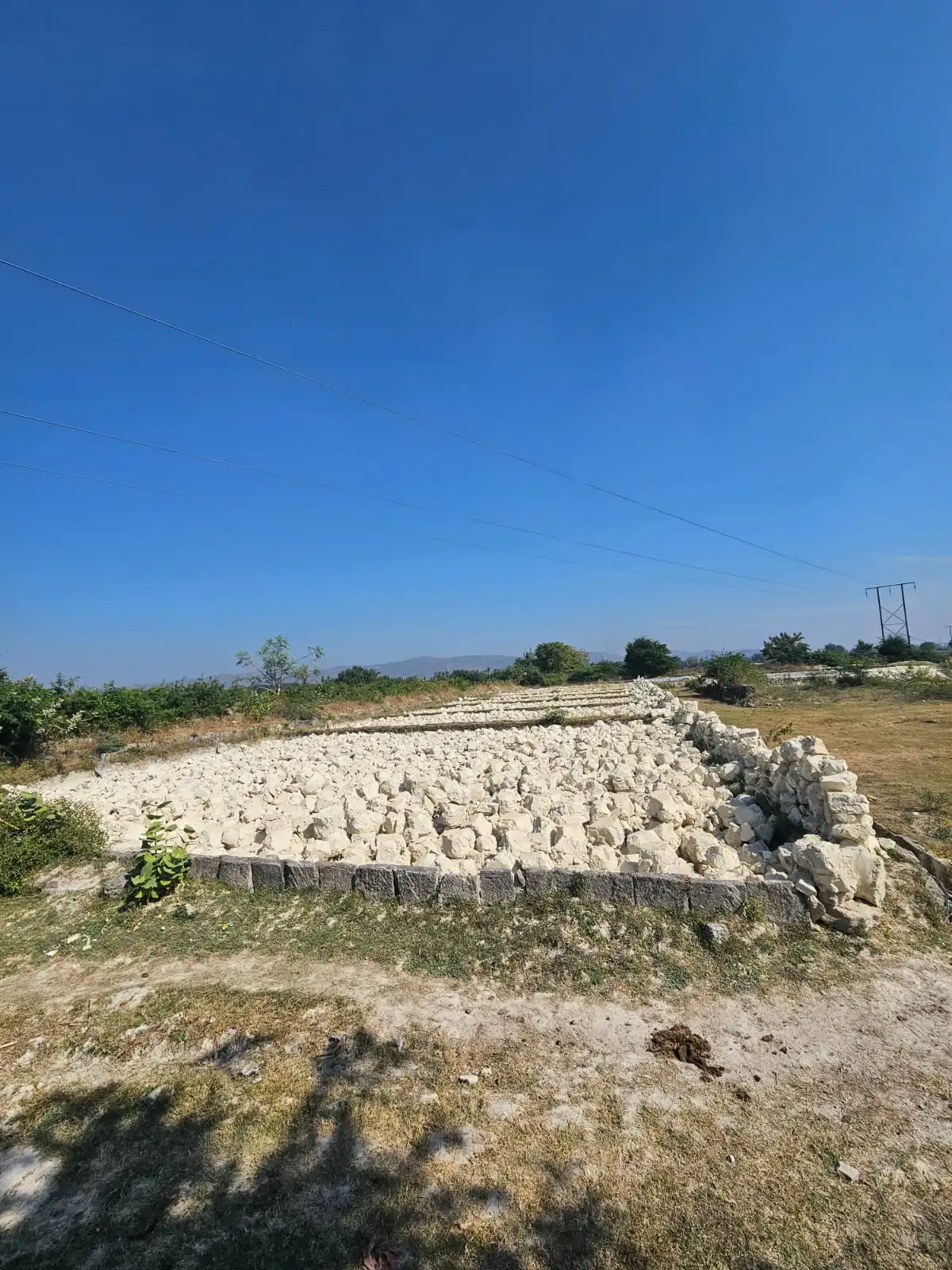
We also offer Chalk Lumps of the highest quality processed in our specialized systems. Gayatri Minerals have achieved immense reputation and clientele assuring almost no heavy metals and substandard material.

Chemically the product is natural calcium carbonate (CaCO3), won from our own mining areas in the Porbandar chalk belt and milled at our 22,000 sq ft processing unit. It reaches manufacturers as a mineral filler: the high-volume, low-cost, thermally stable component that carries bulk in a rubber compound, a paint film, a PVC profile, a wall putty or a cable sheath — and, as the bulk filler, in flame retardant compound formulations as well.

Natural CaCO3 Halogen-free Moist-free Custom mesh grades Bulk supply
Natural Substance
Whiting Chalk is a natural substance and a variety of Calcium Carbonate. It may vary in color and chemical properties.
Highest Quality
Almost no heavy metals. Moist-free product guaranteed throughout supply.
ISO Certified Trust
Quality control aligned with ISO standards. 35+ years of consistent supply across India.
Chemical Composition
Calcium Carbonate (CaCO3) — natural mineral with variable colour and composition.
Product Images

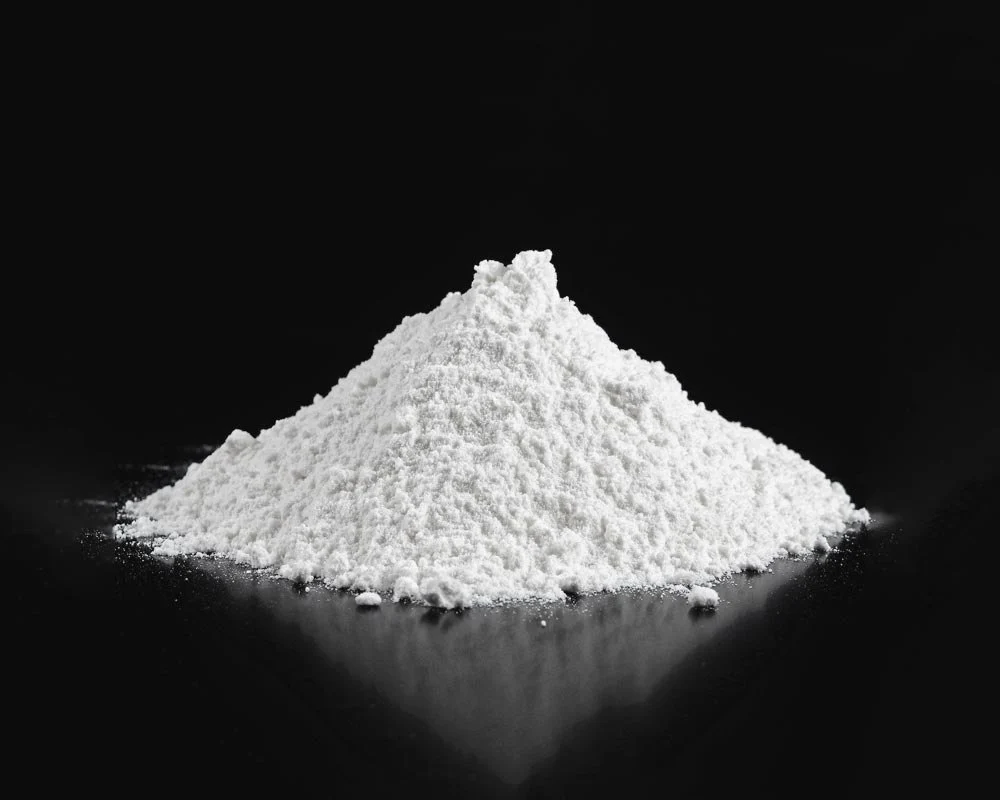
High purity calcium carbonate powder close-up texture
Industrial chalk powder processing at the Gayatri Minerals plant, Porbandar
Packaged whiting chalk powder bags for bulk industrial dispatch
Calcium carbonate manufacturing unit exterior, Porbandar, Gujarat

Product Uses

In the Paint industry, it is used for manufacture of Primers, Putty and Distempers.
Whiting Chalk Powder is highly used in all Rubber Manufacturing Industries.
In Ceramics, it is used as one of the body constituents.

Technical Features

Whiting chalk is a natural mineral, so colour and composition vary within a normal band rather than sitting on a single fixed number. The characteristics below are what we control for, and what determine how the powder behaves in your process.

Characteristics of Gayatri Minerals natural calcium carbonate. A batch analysis for your specific grade is available on request.
CharacteristicWhat we supplyWhy it matters to you
Chemical identity Natural calcium carbonate, CaCO3 Chemically inert in almost all polymer and binder systems; will not interfere with cure
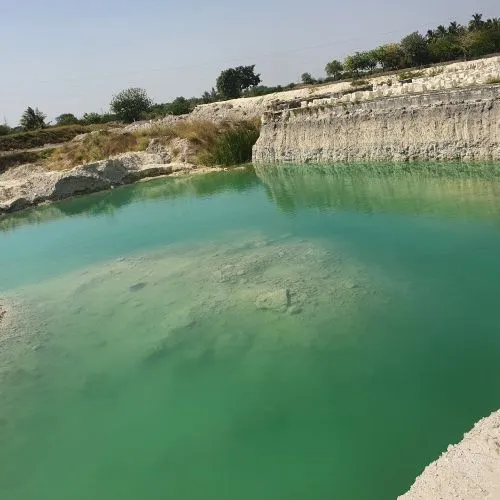
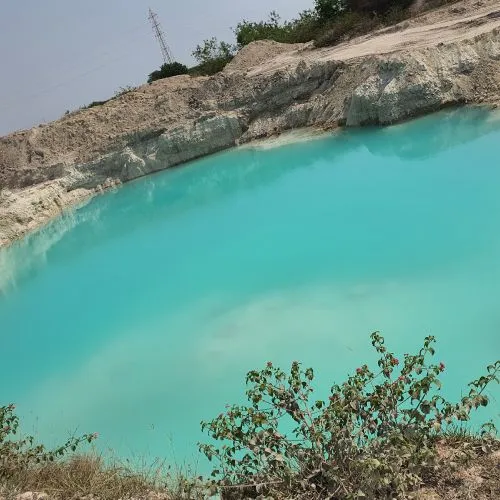
Mineral origin Whiting chalk from our own Porbandar mining areas Naturally soft and bright — mills finer at lower energy than limestone or marble feedstock
Whiteness Naturally high, consistent within grade Sets the ceiling on how white your paint, putty, PVC or light rubber article can be
Particle size Classified per grade; custom fineness to specification Controls dispersion time, surface finish, gloss, and abrasion on screws and dies
Moisture Moist-free through storage and dispatch Absorbed water flashes off in hot processing and leaves voids in cable, profile and film
Heavy metals Screened to exclude heavy metals and substandard material Prevents discoloration and keeps you inside restricted-substance requirements
Halogen content Halogen-free mineral Compatible with halogen-free flame retardant and low-smoke formulation strategies
Thermal stability Stable through normal polymer processing temperatures Survives rubber cure, PVC extrusion and masterbatch compounding without breaking down
Available forms Milled powder; chalk lumps also supplied Buy finished powder, or the raw mineral if you grind in-house

How Each Industry Uses This Calcium Carbonate

Rubber

A semi-reinforcing and extending filler in moulded goods, hoses, mats, footwear soling and technical rubber parts. It improves dimensional stability and calendering behaviour, stiffens the uncured compound so it holds shape, and reduces cost per kilogram — without the cure interference a poorly chosen filler can cause. More on rubber →

Plastic

Used in polyolefin masterbatch, injection-moulded housewares, woven sacks, sheet and film. Raises stiffness and heat deflection temperature, improves printability and dimensional control, and pulls heat out of the melt faster than neat polymer — which shortens cycle time. More on plastic →

Paint

An extender pigment for primers, putties, distempers and emulsion paints. Builds film solids, controls sheen and rheology, reduces settling, and lets the formulator hold opacity while trimming expensive titanium dioxide. More on paint →

Wall Putty

A primary raw material for white cement and acrylic wall putty. Whiteness drives the finished appearance of the wall; particle grading drives how smoothly the putty trowels, how it sands back, and how well it accepts the topcoat. More on construction →

PVC

Central to both rigid and flexible PVC — pipes, profiles, hoses, footwear and flooring. In rigid PVC it contributes stiffness and impact performance; in plasticised compounds it carries volume and controls cost while keeping the melt processable. More on PVC →

Paper

Used as a filler and coating pigment. It improves opacity, brightness and printability, and substitutes for a share of the more expensive fibre furnish in the sheet. More on paper →

Ceramic

One of the body constituents in ceramic formulations, and a flux and matting agent in glazes, where it influences thermal expansion, firing behaviour and finished surface. More on ceramic →

Cable

A filler for PVC and rubber cable sheathing and bedding compounds. Cleanliness and low moisture matter more here than almost anywhere else — absorbed water and grit turn directly into voids and into degraded electrical performance in the finished cable. More on cable →

Adhesives & Sealants

A rheology modifier and extender in polyurethane, silicone, acrylic and rubber-based systems. It builds body, controls slump and sag on a vertical joint, and stabilises formulation cost. More on adhesives & sealants →

Mineral Filler for Flame Retardant Compounds

Compounders across India buy our natural calcium carbonate as a flame retardant compound raw material — the bulk mineral filler in flame retardant rubber, flame retardant plastic, flame retardant PVC compound and flame retardant cable compound formulations. Here is exactly what it does in those recipes — and, just as importantly, what it does not do.

Read this first

Calcium carbonate is not a flame retardant. We do not sell it as one, we claim no flame-retardant performance for it, and it must never be specified as the fire-performance component of a formulation. Unlike alumina trihydrate (ATH) or magnesium dihydroxide (MDH) it releases no water of hydration at fire temperatures and has no flame-retardant mechanism of its own. What follows describes its role as the bulk mineral filler within flame retardant formulations, working alongside an active system that delivers the actual fire performance.

How flame retardants actually work

To see why calcium carbonate is not one, it helps to know what the real mechanisms are. ATH and MDH — the workhorses of halogen-free flame retardancy — decompose endothermically at elevated temperature and release water vapour as they do. Three things happen at once: the decomposition absorbs heat and cools the polymer below its pyrolysis temperature, the released water vapour dilutes the flammable gases at the flame front, and an oxide residue forms a protective surface layer. ATH begins decomposing around 200 °C and MDH around 300 °C, which is why MDH is chosen for polymers processed too hot for ATH to survive. Intumescent systems swell into an insulating char. Phosphorus and halogen chemistries interrupt combustion in the condensed or gas phase.

Calcium carbonate does none of these. It decomposes only well above the temperatures at which a polymer fire is decided, forms no protective char, and does not interfere with combustion chemistry. Any supplier presenting it as a flame retardant is either mistaken or hoping the buyer will not check.

Why flame retardant formulations need a bulk filler anyway

Because ATH and MDH work by physical mechanisms, they have to be present in bulk. Demanding fire performance in a halogen-free system commonly requires loadings in the region of 50 to 65 percent by weight. At that level three problems arrive together: the compound becomes expensive, because ATH and MDH cost several times what a mineral filler costs; it becomes difficult to process, with high viscosity, high die pressure and poor flow; and its mechanical properties suffer — brittleness, reduced elongation, and density drifting outside specification.

Natural calcium carbonate is what makes such a formulation practically and commercially workable. That is a real and specific job, and it is the reason the mineral appears in so many flame retardant recipes.

What the filler contributes

  • Dilution of the combustible fraction. Every kilogram of inert mineral is a kilogram of polymer that is not present to burn. A compound at 60 percent total mineral loading carries less than half the fuel of the neat polymer — less material to pyrolyse, less heat released, less smoke generated. This is a dilution effect, not flame retardancy: it scales with loading and does nothing to interrupt combustion chemistry.
  • Halogen-free chemistry. Our natural mineral is halogen-free, so it works with low-smoke halogen-free formulation strategies rather than against them.
  • Thermal stability through processing. It survives rubber vulcanisation, PVC extrusion and compounding temperatures without decomposing or gassing off.
  • Cost control. Partial substitution of ATH or MDH within the range you have validated is often the only thing keeping a high-loading halogen-free compound competitive.
  • Mechanical and density targets. Hardness, stiffness and specific gravity that a heavily flame-retarded compound would otherwise miss.
  • Processing behaviour. Better flow, easier dispersion and reduced die swell in a compound already stressed by very high mineral loading — fine, well-classified calcium carbonate disperses more readily than coarse ATH.

How the minerals in an FR filler package differ

Active flame retardants versus inert fillers. Only the first two retard flame.
Mineral Flame-retardant action Role in the compound Relative cost
Alumina trihydrate (ATH) Yes — endothermic, releases water from ~200 °C Active flame retardant Moderate
Magnesium dihydroxide (MDH) Yes — endothermic, releases water from ~300 °C Active flame retardant for hotter processing High
Calcium carbonate (our product) None Bulk filler — dilution, cost, processing, mechanicals Low
Clay (kaolin) None Filler with electrical / barrier benefits Low to moderate
Talc None Platy filler — reinforcement, barrier, rheology Moderate

Flame Retardant Rubber

EPDM, SBR, NBR and CR compounds for seals, profiles, mats, gaskets and technical goods. This is the largest single use of calcium carbonate for rubber in flame retardant work. Our filler carries volume alongside the ATH or MDH package, helps hold hardness and specific gravity, and disperses cleanly in a compound already stressed by very high mineral loading. Consistent grading matters most here — in a validated FR compound, batch drift is a compliance risk rather than merely a quality issue.

Flame Retardant Plastic

Filled polyolefin and engineering polymer compounds, using the same plastic grade calcium carbonate supplied to non-FR moulders. The mineral raises stiffness and heat deflection while diluting the combustible polymer fraction, and its low abrasiveness protects screws and barrels running at high mineral loadings. Fineness and a controlled top cut govern how much you can load before impact strength becomes the binding constraint.

Flame Retardant PVC Compound

Rigid and flexible. PVC is already more difficult to ignite than polyolefins because of its chlorine content, but FR grades go further with dedicated additive packages. Calcium carbonate provides the bulk that makes those packages affordable, while clean, dry material protects the heat-stabiliser system that keeps PVC from degrading during processing.

Flame Retardant Cable Compound

Sheathing and bedding compounds, including low-smoke halogen-free constructions. This is the least forgiving FR application: absorbed moisture becomes voids in the sheath, and voids are where electrical breakdown and water treeing begin. Our moist-free guarantee and halogen-free chemistry are specified precisely for this reason.

Fire-Rated Sealants & Coatings

Intumescent and fire-rated sealants, mastics and coatings use calcium carbonate as extender and rheology modifier — building body, controlling slump in a vertical joint, and reducing cure shrinkage — while the intumescent package delivers the fire performance.

Construction Products

Dry-mix and board products carrying fire-performance requirements use the mineral as bulk filler in the same way, with whiteness and low soluble salts mattering alongside the thermal and halogen-free properties.

What to specify in a filler for FR work

  1. Consistency, above everything. A validated FR compound is a certified compound; batch-to-batch drift in any component is a compliance exposure.
  2. Halogen-free, confirmed — our natural mineral is by nature.
  3. Thermal stability through your cure and processing window.
  4. Low moisture. High mineral loading already stresses the compound; added water produces porosity easily mistaken for premature ATH decomposition.
  5. Good dispersibility and no gritty oversize, because dispersion is already the hardest part of the job at 50–65 percent loading.
The compounder's responsibility

Fire performance is a property of the finished compound, not of any single ingredient. It must be established by testing against the standard that governs your application — UL 94, IEC 60332, EN 45545-2 or a customer specification. Substituting or increasing any filler, including ours, changes the compound and may change its result. Our commitment is narrower and more useful: a consistent, clean, halogen-free, thermally stable mineral filler so that a formulation you have already validated can be produced repeatably, consignment after consignment.

Need certified fire performance instead?

Gayatri Minerals also operates a separate division supplying EN 45545-2 HL3 compliant fire retardant compounds and extruded profiles for railway and metro rolling stock. That is a certified fire-performance product with its own test data — a different thing entirely from a mineral filler, and the right place to look if certified performance rather than a filler is what you need.

Formulating a flame retardant compound?

Tell us the polymer, the active FR system and your total mineral loading. We will recommend a filler grade and be straightforward about what it will and will not do for your fire performance.

Discuss Your Formulation

Why Manufacturers Specify Our Chalk Powder

Consistency you can formulate around

Because we mine our own material, we control the input as well as the output. The grade you approve at trial is the grade that arrives on the next order — which is the difference between a filler you can design a formulation around and one you have to keep re-checking.

Genuine cost advantage

Whiting chalk is naturally soft. It mills to a fine, bright powder using far less energy than harder limestone or marble feedstock, and that structural cost advantage is passed through in the price rather than absorbed by a grinding step.

Moist-free guarantee

Material is handled under cover from drying through to bagging. In Indian monsoon logistics that is not a small claim — damp filler is the most common cause of porosity, poor dispersion and surface defects reported by compounders.

Clean chemistry

Screened to exclude heavy metals, gritty oversize and substandard material. Cleaner filler means less discoloration, less die and screw wear, and fewer restricted-substance surprises during customer audits.

Capacity for real volumes

1000–1200 metric tonnes a month from a 22,000 sq ft plant means scheduled bulk contracts and shorter-notice top-ups can both be served, instead of one crowding out the other.

Technical conversation, not order-taking

Tell us the polymer or binder system, the loading you intend to run and the finish you need, and we will recommend the grade that fits — including saying so when a finer or coarser grade than you asked for would serve you better.

Packaging, Custom Grades and Quality Assurance

Packaging

Supplied in bulk packing suited to industrial consumption. The exact format is confirmed at order stage so it matches how you charge material — bagged for manual handling, or larger packs where you feed in bulk. Material is protected against moisture pick-up in transit.

Custom Sizes & Grades

Custom fineness is a routine part of our supply, not an exception. Share the application, the loading you plan to run and any internal acceptance limits, and we will mill and classify to that specification rather than pushing a standard grade at you.

Quality Assurance

Quality control is carried out in line with ISO 9001:2015 standards and to each customer's own requirement where that is stricter. Checks run from mine face selection through drying, milling and classification to the packed bag — the whole chain, because we own the whole chain.

Need a quotation or a sample?

Tell us your industry, target loading and required fineness. We will come back with the right grade, the right pack format and a price for your volume — not a generic datasheet.

Request a Quote